Top Cybersecurity Tools Experts Use (And Why They Matter)
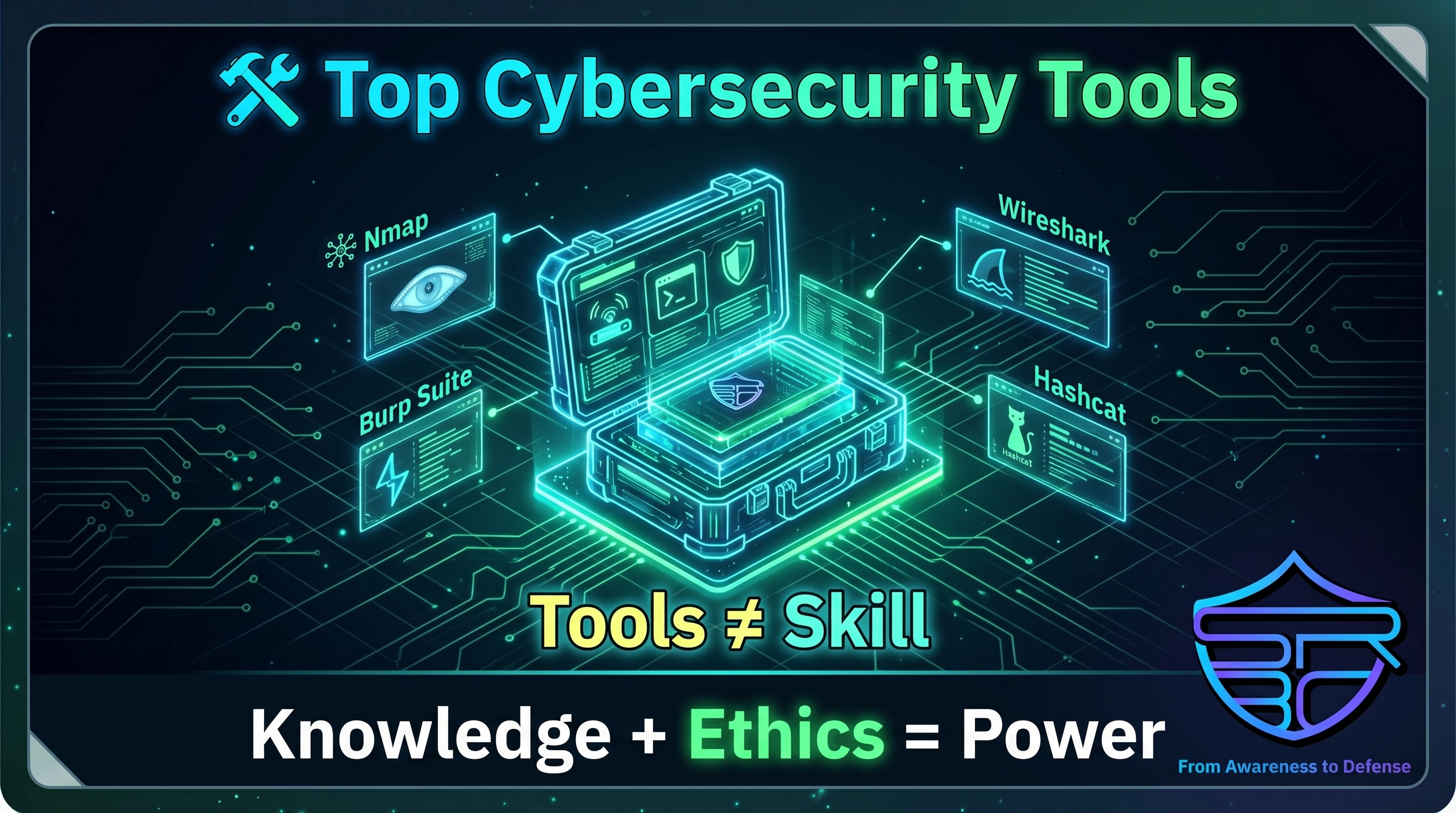
🛠️ Top Cybersecurity Tools Experts Use (And Why They Matter)
In the world of cybersecurity, tools are everywhere.
From network scanners to advanced threat detection systems—tools help professionals uncover vulnerabilities, analyze systems, and defend against attacks.
But here’s the reality:
Tools don’t make you a hacker. Understanding does.
Still, knowing the right tools—and how they work—can give you a massive advantage.
🔍 Why Cybersecurity Tools Matter
Modern digital systems are too complex to secure manually.
Cybersecurity tools help professionals:
- ⚡ Automate repetitive tasks
- 🔎 Discover hidden vulnerabilities
- 📊 Analyze massive datasets
- 🛡️ Strengthen system defenses
Without tools, even experienced experts would struggle to keep up with modern threats.
🧰 Categories of Essential Cybersecurity Tools
Let’s explore the most important categories of tools used by experts.
🌐 1. Network Scanning Tools
Network scanning is the first step in both attack and defense.
🔧 Example Tools:
- Nmap (Network Mapper)
💡 What It Does:
- Identifies open ports
- Detects running services
- Maps network structure
🎯 Why It Matters:
Understanding a network is the foundation of cybersecurity.
If you don’t know what’s running—you can’t secure it.
🐞 2. Vulnerability Scanners
These tools help identify known weaknesses in systems.
🔧 Example Tools:
- Nessus
- OpenVAS
💡 What They Do:
- Scan for outdated software
- Detect misconfigurations
- Highlight security vulnerabilities
🎯 Why It Matters:
They save time by automatically identifying common security issues.
🌍 3. Web Application Testing Tools
Web applications are one of the biggest attack surfaces today.
🔧 Example Tools:
- Burp Suite
- OWASP ZAP
💡 What They Do:
- Intercept and modify HTTP requests
- Test for vulnerabilities like:
- XSS (Cross-Site Scripting)
- SQL Injection
- Authentication flaws
🎯 Why It Matters:
Most real-world attacks target web applications—these tools help defend them.
🔐 4. Password Testing Tools
Passwords remain a major security weakness.
🔧 Example Tools:
- Hashcat
- John the Ripper
💡 What They Do:
- Crack password hashes
- Test password strength
- Identify weak credentials
⚠️ Important:
These tools must only be used in authorized environments.
🧠 5. OSINT & Reconnaissance Tools
Information gathering is a powerful phase in cybersecurity.
🔧 Example Tools:
- theHarvester
- Maltego
💡 What They Do:
- Collect publicly available information
- Identify domains, emails, and relationships
- Map attack surfaces
🎯 Why It Matters:
Attackers often exploit publicly available data—so defenders must understand it too.
🛡️ 6. Blue Team / Defense Tools
Not all cybersecurity professionals attack systems—many defend them.
🔧 Example Tools:
- Splunk (SIEM)
- Wireshark
💡 What They Do:
- Monitor network traffic
- Detect anomalies and threats
- Analyze suspicious activities
🎯 Why It Matters:
Defense tools help detect and respond to attacks in real time.
⚠️ Tools Are Not Enough
Let’s be honest:
- Anyone can download a tool
- Not everyone can interpret the results
Running tools without understanding makes you a script kiddie.
Understanding tools makes you a professional.
🚀 How Beginners Should Start
If you’re new to cybersecurity, follow this path:
- Learn basic networking concepts
- Study the OWASP Top 10 vulnerabilities
- Start with beginner-friendly tools like:
- Nmap
- Burp Suite
- Practice in safe environments:
- TryHackMe
- Hack The Box
Consistency is more important than speed.
🛡️ ASRBD’s Perspective
At ASRBD (Advanced Security Researchers Bangladesh), we believe:
- Tools should be used for education
- Skills should be built through practice
- Knowledge should be shared to protect others
We promote ethical hacking and responsible cybersecurity practices to build a safer digital Bangladesh.
📢 Final Thought
A tool in the wrong hands is dangerous.
A tool in the right hands is powerful.
The difference is simple:
Knowledge + Ethics
💬 Which cybersecurity tool do you use the most?
📢 Share your thoughts in the comments
🔐 Follow ASRBD for more cybersecurity insights
Let’s build a secure digital future together.