Phishing: Why It Still Tricks Us In 2026
Phishing attacks are still one of the most successful hacking methods in 2026. Learn how they work, why they succeed, and how to protect yourself.
Phishing: Why It Still Tricks Us In 2026
You’ve heard about phishing before.
Fake emails.
Suspicious links.
Scam messages.
So you should be safe… right?
👉 Wrong.
Phishing is still one of the most successful cyber attacks in 2026.
🧠 The Real Reason Phishing Still Works
Phishing doesn’t hack systems.
👉 It hacks human behavior.
No matter how advanced security becomes…
Humans still:
- Panic
- Trust
- Act quickly without thinking
And attackers exploit exactly that.
🎯 What Modern Phishing Looks Like
Phishing is no longer obvious.
It’s no longer:
“You won lottery!!! Click here!!!”
Now it looks like:
- Emails from your bank
- Messages from your boss
- Links from your friends
- Notifications from real platforms
👉 It feels real. Because it is designed to feel real.
💀 A Real Scenario
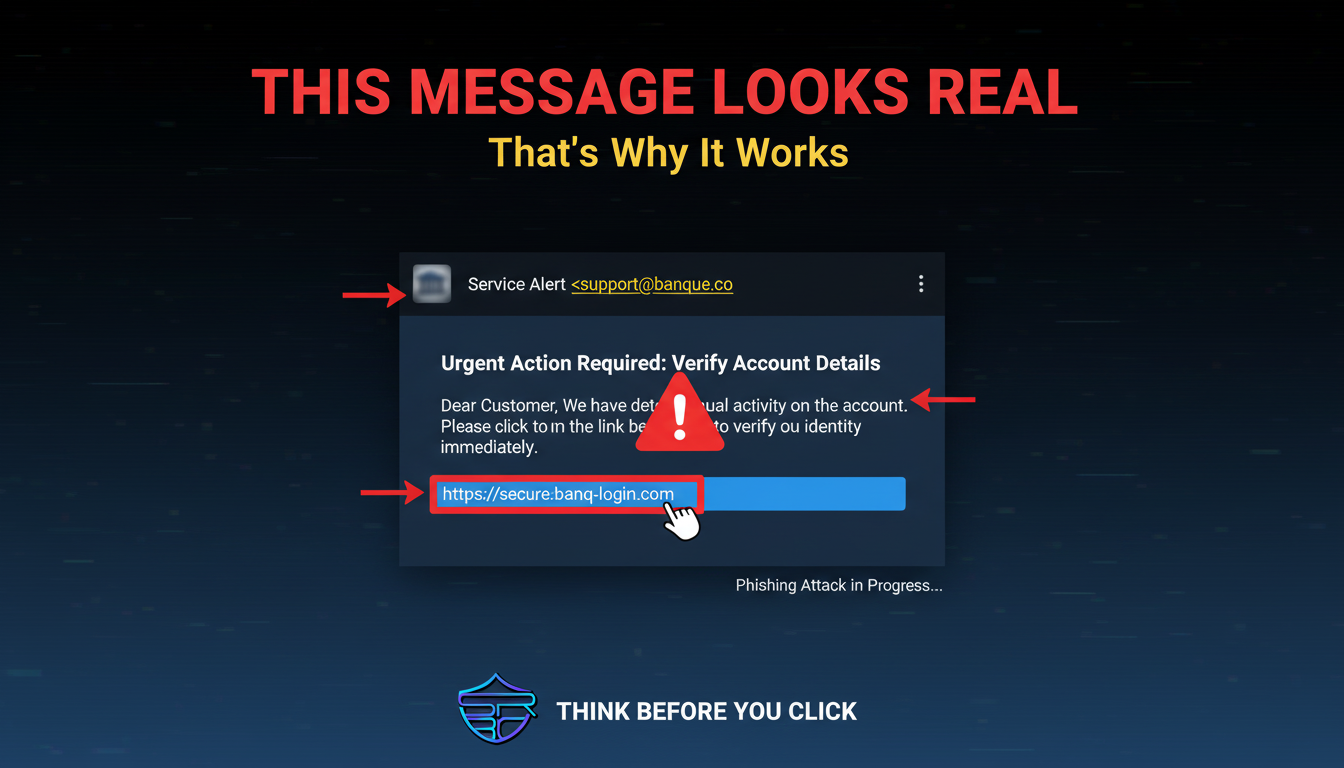
You receive an email:
“Unusual login detected. Secure your account now.”
It looks exactly like your bank.
Same logo.
Same format.
Same tone.
You click.
You log in.
👉 And just like that… your credentials are stolen.
🕵️♂️ How Attackers Make It So Convincing
Attackers use:
- Real company branding
- Domain spoofing (fake URLs that look real)
- Personal data (from social media or leaks)
This creates targeted phishing.
Not random.
👉 Personalized.
⚔️ Types of Phishing You Should Know
🎣 Email Phishing
Fake emails pretending to be trusted sources.
💬 Message Phishing (Smishing)
SMS or chat messages with malicious links.
🎯 Spear Phishing
Highly targeted attacks using your personal data.
🧑💼 Business Email Compromise
Fake emails from “boss” or “company” asking for urgent actions.
🚨 The Trigger Points Hackers Use
Every phishing attack uses one of these:
- Fear → “Your account will be locked”
- Urgency → “Act now or lose access”
- Curiosity → “See who viewed your profile”
👉 If you feel emotional pressure… it’s likely a trap.
🛡️ How to Protect Yourself
Simple habits can stop most phishing attacks:
- Always check the URL before logging in
- Never click links from unknown sources
- Verify messages—even if they look real
- Don’t share OTP or credentials
- Use 2FA for extra protection
Most importantly:
👉 Slow down. Hackers rely on your speed.
🚀 Final Thought
Phishing doesn’t need advanced hacking skills.
It only needs one thing:
👉 Your reaction.
And if you react without thinking…
You’ve already lost.
🔐 About ASRBD
ASRBD – Advanced Security Researchers Bangladesh is dedicated to exposing real-world cyber threats and helping people stay safe in an increasingly deceptive digital world.
📢 Follow for More
👉 Next: Public Wi-Fi: Your Data’s Open Door