Fake Websites & Domains: How Scammers Trick You
Fake Websites & Domains: How Scammers Trick You
You visit a website.
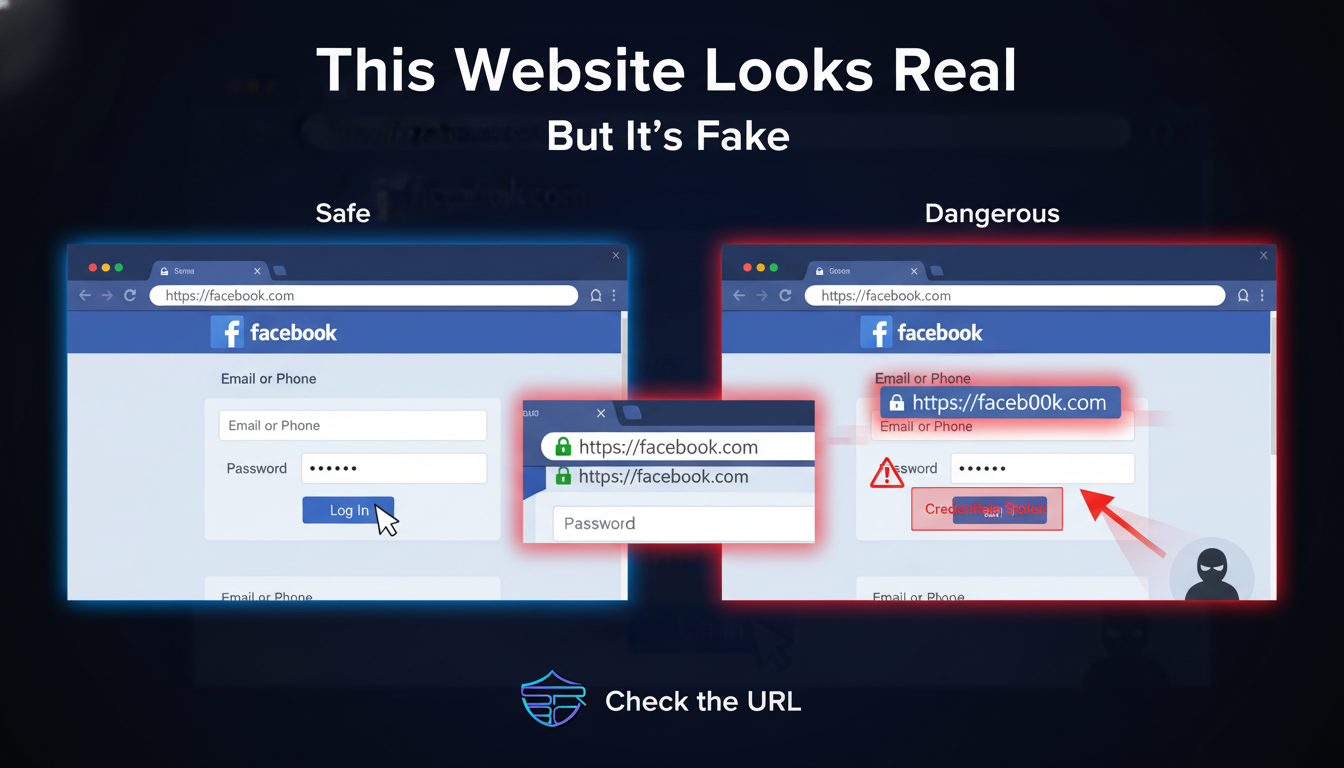
It looks exactly like the real one.
- Same colors
- Same layout
- Same login page
Nothing feels wrong.
👉 That’s exactly the problem.
💀 The Hidden Trap
Cybercriminals create fake websites that perfectly mimic trusted platforms.
Their goal?
👉 Trick you into entering your login details.
These websites are often indistinguishable from the original.
🎯 How You Get There
You don’t usually type these websites manually.
Instead, attackers bring you there through:
- Phishing emails
- Fake ads
- Messages with malicious links
- Search engine manipulation
👉 You click… and land on a fake site.
🧠 The Most Dangerous Trick: Fake Domains
Attackers register domains that look almost identical to real ones.
Examples:
faceb00k.com(using zero instead of “o”)paypaI.com(capital “i” instead of “l”)goog1e.com(number “1” instead of “l”)
At a glance?
👉 You won’t notice the difference.
💀 What Happens Next
You log in like normal.
You enter:
- Your email
- Your password
- Your OTP
👉 And all of it goes directly to the attacker.
🕵️♂️ Why This Works
Because people trust what they see.
Most users don’t:
- Check the full URL
- Verify domain spelling
- Look beyond the design
👉 One moment of trust can lead to full compromise.
🛡️ How to Protect Yourself
Stay alert and build better habits:
- Always check the URL carefully
- Bookmark important websites
- Avoid clicking login links from emails or messages
- Look for HTTPS (but don’t rely on it alone)
- Use a password manager (it can detect fake domains)
👉 If the URL is wrong, everything is wrong.
🚀 Final Thought
Hackers don’t need to break real websites.
👉 They just create a convincing copy.
And if you believe it…
👉 You give them access yourself.
🔐 About ASRBD
ASRBD (Advanced Security Researchers Bangladesh) is dedicated to raising cybersecurity awareness and helping people stay safe from real-world threats.
📢 Next Topic
👉 Email Spoofing & BEC: The Attack You Can’t See