Email Spoofing & BEC: The Attack You Can’t See
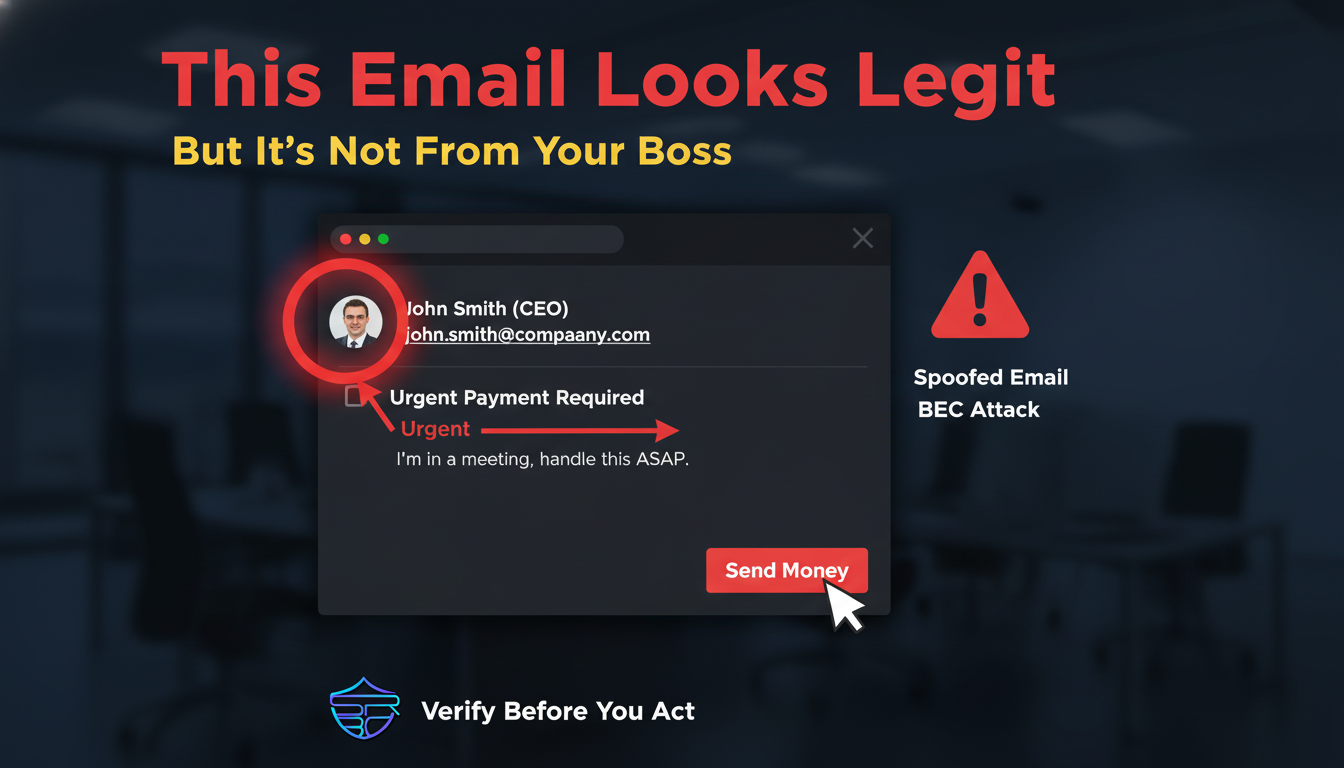
Email Spoofing & BEC: The Attack You Can’t See
You receive an email.
From your boss.
From your CEO.
“Urgent: Process this payment now.”
“Send me the file immediately.”
Everything looks real.
👉 But it might not be.
💀 What Is Email Spoofing?
Email spoofing is when attackers fake the sender’s identity to make an email appear as if it’s coming from a trusted source.
👉 It could look like it’s from your manager… but it isn’t.
🎯 What Is Business Email Compromise (BEC)?
BEC is a targeted attack where hackers:
- Impersonate executives or trusted contacts
- Send urgent or sensitive requests
- Trick employees into taking action
👉 Usually involving money or confidential data.
🧠 Why These Attacks Work
Because they don’t rely on malware.
They rely on:
- Authority → “This is from your boss”
- Urgency → “Do it now”
- Trust → “This looks legitimate”
👉 And people react without verifying.
💀 A Real Scenario
An employee receives an email:
“I’m in a meeting. We need to send this payment urgently.”
The sender appears to be the CEO.
No suspicion.
The employee transfers the money.
👉 The email was fake.
👉 The money is gone.
⚠️ Warning Signs
Look closely:
- Slightly altered email domains
- Unusual or urgent requests
- Requests for payments or sensitive data
- Messages discouraging verification (“I’m busy, don’t call”)
👉 Small details can reveal the attack.
🛡️ How to Protect Yourself
Simple steps can prevent serious damage:
- Always verify unusual requests via phone or in person
- Check the sender’s full email address carefully
- Don’t act under pressure
- Use email filtering and security tools
- Train teams to recognize spoofing attacks
👉 Trust, but always verify.
🚀 Final Thought
The most dangerous attacks don’t break systems.
👉 They break your judgment.
And once that happens…
👉 You do the rest for them.
🔐 About ASRBD
ASRBD (Advanced Security Researchers Bangladesh) is dedicated to spreading cybersecurity awareness and protecting individuals and organizations from modern cyber threats.
📢 Next Topic
👉 Inside a Hacker’s Mind: The 5-Step Attack Process